Overview
Editor's note: Signal integrity (SI) and power integrity (PI) are relatively mature areas, while power electronics has only recently attracted more attention. After reviewing internal documents, this article summarizes basic concepts of power electronics through a comparison with power integrity.
Background
Driven by the rapid development of the New energy sector, signal integrity and power integrity have been widely discussed in recent years, and many related concepts are already applied in everyday work. More companies and engineers have recognized their importance for electronic product design. This article introduces the relatively unfamiliar topic of power electronics.
Definitions
Signal integrity means that a signal sent from a chip transmitter is received correctly by the chip receiver. Power integrity provides the correct voltage, current, and noise characteristics for a system to meet expected performance. In simple terms, power from a VRM, delivered through the PDN, should supply the sink with continuous, stable, and clean power.
Power electronics design has the same objective as power integrity: to provide the system with correct voltage, current, and noise characteristics to achieve expected performance. However, the subjects and methods of study differ between the two fields.
Scope of Power Integrity
A complete power system includes the VRM, PCB, decoupling capacitors, package parasitics, and sink parasitics.
Power integrity research focuses on current-carrying capability, current density, electrothermal effects, PDN impedance, power-plane resonance, and SSN (simultaneous switching noise). The primary object of study is the PCB board level.
Relaed Reading: Three Key Areas of Power Integrity Design
Scope of Power Electronics
Power electronics mainly concerns the performance at the power input and output. Typical metrics include conversion efficiency, ripple, stability, and load-step response. This field mainly studies the power supply modules. Poor power electronics design can easily cause EMI issues.
Tools and Simulation
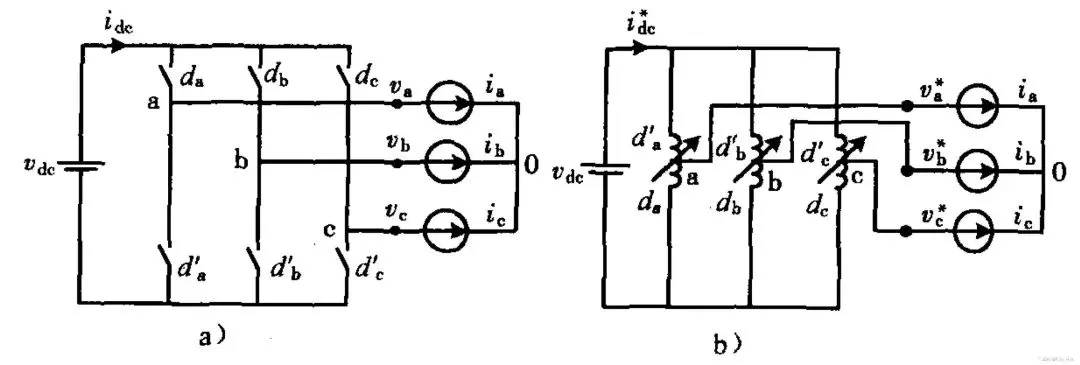
Although both fields deal with power systems, they emphasize different metrics and therefore use different tools. Power integrity simulation typically uses electromagnetic (EM) solvers, such as ADS PIPro, and can combine ADS schematics for coupled field and circuit time-domain analysis. Power electronics simulation uses SPICE-like simulators together with EM solvers, for example ADS PEPro. The diagram below shows a simple PE EMI simulation schematic.